Introduction
Chess is a timeless game of strategy, patience, and foresight. Whether you’re just starting or looking to sharpen your skills, understanding the fundamentals is crucial. For beginners, the right chess lessons can make the difference between frustration and rapid improvement.
In this guide, we’ll explore 10 essential chess lessons for beginners that will help you build a strong foundation, avoid common mistakes, and develop winning strategies. By the end, you’ll be ready to outplay opponents and enjoy the game even more.
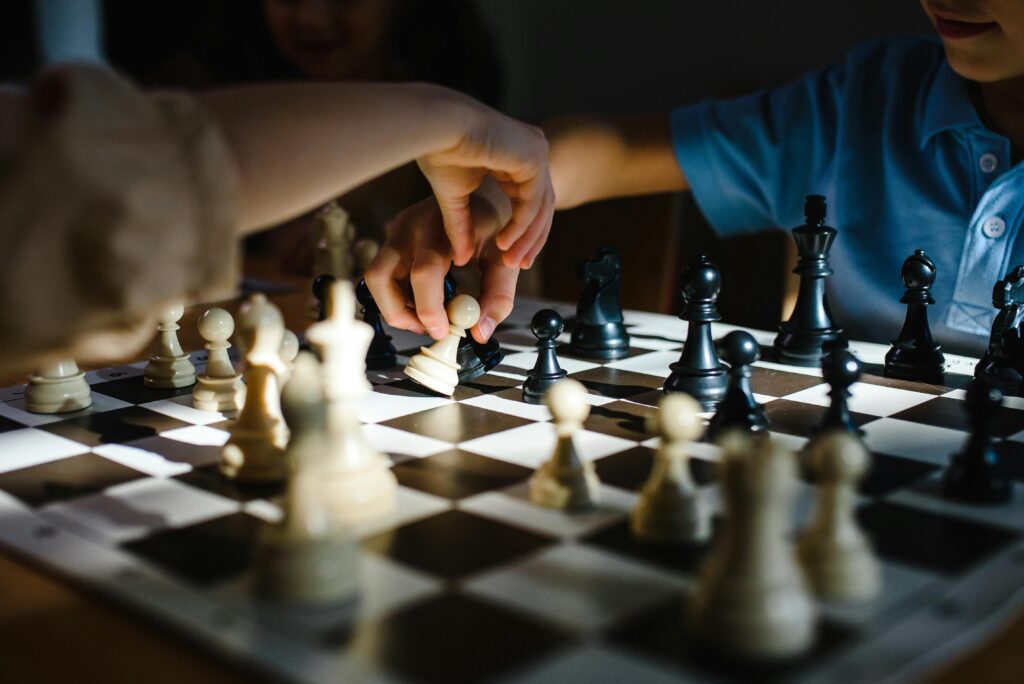
1. Learn the Rules and Basic Moves
Before diving into advanced strategies, ensure you understand the basic rules of chess:
- How each piece moves (pawn, rook, knight, bishop, queen, king).
- Special moves like castling, en passant, and pawn promotion.
- The objective: checkmate your opponent’s king.
Pro Tip: Practice moving each piece individually to get comfortable with their capabilities.
2. Control the Center of the Board
The center squares (e4, d4, e5, d5) are the most valuable real estate on the chessboard. Controlling the center gives your pieces more mobility and limits your opponent’s options.
- Why it matters: Central control allows for faster development and stronger attacks.
- How to do it: Move your pawns to e4 or d4 early in the game to dominate the center.
3. Develop Your Pieces Early
A common beginner mistake is moving the same piece multiple times in the opening. Instead, focus on developing all your pieces (knights and bishops) in the first few moves.
- Key Principle: Knights before bishops, and avoid moving the queen too early.
- Example Opening: 1. e4 e5 2. Nf3 Nc6 3. Bc4 (Italian Game).
4. Protect Your King with Castling
Castling is a defensive move that safeguards your king and connects your rooks. Always castle early to avoid exposing your king to attacks.
- When to castle: Ideally within the first 10 moves.
- Avoid castling into danger: Ensure the squares around your king are safe.
5. Don’t Neglect Piece Safety
Beginners often lose pieces due to hanging pieces (leaving them undefended). Always ask:
- Is my piece protected?
- Can my opponent capture it for free?
Golden Rule: Never leave a piece en prise (unguarded).
6. Understand the Value of Each Piece
Knowing the relative value of pieces helps you make better trades:
- Pawn = 1 point
- Knight/Bishop = 3 points
- Rook = 5 points
- Queen = 9 points
Avoid: Trading a higher-value piece for a lower-value one unless it leads to a tactical advantage.
7. Learn Basic Tactics
Tactics are short-term sequences that gain an advantage. Start with these:
- Fork: Attacking two pieces at once (e.g., with a knight).
- Pin: Immobilizing an opponent’s piece (e.g., a bishop pinning a knight to the king).
- Skewer: Attacking a valuable piece, forcing it to move and exposing a less valuable one.
Practice: Solve simple tactical puzzles daily to improve pattern recognition.
8. Plan Ahead: Think Two Moves Deep
Chess is about anticipation. Before moving, ask:
- What is my opponent’s best response?
- How can I counter their move?
Exercise: Play “blindfold chess” (visualizing moves) to sharpen your foresight.
9. Avoid Premature Attacks
Beginners often launch early attacks without proper development. This usually backfires. Instead:
- Complete your development first.
- Ensure your king is safe.
- Only attack when you have a clear advantage.
10. Analyze Your Games
Reviewing your games is one of the best chess lessons for beginners. Use free tools like Chess.com to:
- Identify blunders.
- Spot missed opportunities.
- Learn from mistakes.
Bonus: Study classic games by masters like Capablanca and Morphy to understand strategic play.
Bonus Tip: Practice Consistently
Improvement comes with practice. Play regularly, solve puzzles, and learn from losses. Join online chess communities or local clubs to accelerate your progress.
Conclusion
Mastering chess is a rewarding journey, and these 10 essential chess lessons for beginners will set you on the right path. By focusing on controlling the center, developing your pieces, and learning basic tactics, you’ll build a strong foundation and avoid common mistakes. Remember, every game is an opportunity to learn and improve.
Ready to take your skills to the next level? Visit Young Grandmasters Chess for expert guidance, personalized chess lessons for beginners, and a community of passionate players. Start your chess journey with us today and unlock your full potential!